
Latest Past Events

AI/ML-Assisted Design of Photonic Integrated Circuits: From Compact Waveguide Bends to Foundry PDKs
MIT Lincoln Lab - Wood St 244 Wood Street, LexingtonDr. Keisuke Kojima Boston Quantum PhotonicsSilicon and silicon nitride photonic integrated circuits (PICs) are taking on increasingly demanding roles in optical communications, sensing, and quantum applications, yet device count and functionality continue to outpace the area budget available on a chip. Fitting more capability into a fixed footprint is now as much a design problem as a fabrication one — a class of problem where modern machine learning, including recent generative AI methods, has shown promising results compared to conventional design approaches. In this talk, I survey recent progress in applying ML and inverse design to photonic device development, drawing on work from across the community as well as projects I have led. I then present our recent work on compact silicon nitride waveguide bends, in which AI-assisted design achieves lower loss than a widely-used Euler bend of similar footprint. We have also generated arbitrary-angle bends for flexible routing. The designs have been verified through foundry fabrication and measurement, indicating that the approach is compatible with standard production flows rather than confined to simulation. Looking ahead, AI and ML may help accelerate process design kit (PDK) development by supporting component library generation. This is collaborative work with Spark Photonics Design, Inc. and AIM Photonics.Keisuke Kojima has worked in photonic devices and optical communications for over 40 years. He received his B.S., M.S., and Ph.D. from the University of Tokyo, Japan, and an additional M.S. from the University of California, Berkeley. He spent eight years at Mitsubishi Electric in Japan working on narrow-linewidth/surface-emitting DFB and DBR lasers and optical neural networks, followed by nine years at AT&T/Lucent Bell Laboratories on the development and commercial introduction of uncooled Fabry–Pérot and DFB lasers, and research on VCSELs. From 2005 to 2021 he was with Mitsubishi Electric Research Laboratories (MERL) in Cambridge, MA, where he focused on nanophotonic device design using deep learning and coherent optical systems. In 2022 he founded Boston Quantum Photonics, dedicated to developing novel photonic devices using state-of-the-art AI/machine learning. He is also a Senior Photonic Device Designer at Cactus Materials, Inc. in Tempe, AZ, where he designs semiconductor lasers. He is a Fellow of Optica and a Life Fellow of IEEE, and served as Chair of the IEEE Photonics Society's Boston Chapter.Register for this event.

Integrated Ti:sapphire Photonics for High-Performance Lasers and Amplifiers
MIT Lincoln Lab - Wood St 244 Wood Street, LexingtonDr. Joshua Yang Brightlight PhotonicsTitanium-doped sapphire (Ti:sapphire) lasers have enabled major advances over the past decades, from optical frequency combs to multiphoton microscopy. Their unmatched bandwidth and tunability make them indispensable for applications in atomic physics and quantum optics. However, their widespread use remains limited by system size, cost, and high optical pump requirements. In this presentation, I will introduce our work on monocrystalline Ti:sapphire-on-insulator (Ti:SaOI) photonics, which enables chip-scale integration of Ti:sapphire gain for compact, scalable, and high-performance laser systems.Dr. Joshua Yang is the CEO and Co-Founder of Brightlight Photonics, a company commercializing integrated Ti:sapphire laser technology. He received his B.S. from The University of Texas at Austin and his Ph.D. from Stanford University, where he led the development of an integrated Ti:sapphire photonics platform. He is an Activate Fellow and a Forbes 30 Under 30 honoree.Register for this event.
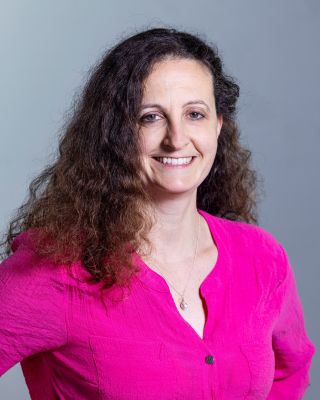
Measuring proteins with photoelectric silicon biosensors
MIT Lincoln Lab - Wood St 244 Wood Street, LexingtonDr. Marcie Black Advanced Silicon GroupProtein sensing is where the rubber hits the road in biology. Hence, measuring protein concentrations is important for many applications, including point-of-care testing, bio and pharma manufacturing, food production, bioweapons detection, and agriculture. The field of biosensing has made great progress and is about to enter a more mature stage that will greatly improve our lives. In this talk, we review the market for biosensing. Then we focus on ASG’s photo-electric enzyme-linked immunosorbent assay (ELISA) that uses the change in photocurrent of a weakly passivated photovoltaic cell to measure changes in the surface recombination velocity as a result of the presence/absence of proteins on the diode’s surface. Since we use silicon wafers and perform an electrical measurement, we can make use of the semiconductor industry’s ability to pack many tests onto the same chip, thus creating a cost-efficient, multiplexed test that measures the concentration of many different proteins simultaneously. We will explore the mechanism of the operation of the sensors. In addition, we will present results showing the response of the sensor when exposed to an organic molecule of interest.Marcie Black is CEO and co-founder of Advanced Silicon Group (ASG). Dr. Black brings to the company expertise in building strong teams, managing development projects, patents, IP strategy, encouraging a healthy company culture, cost modeling, and running a startup. In addition, Dr. Black has a strong technical background in the areas of electronic materials, optics, semiconductors, solar cells/photovoltaics, batteries, renewable energy, nanotechnology, device design, and opto-electronics. Prior to founding ASG, Marcie was the President and co-founder of Bandgap Engineering, which focused on lowering the cost of solar electricity through black silicon or silicon nanowire solar cells. Before joining Bandgap, Marcie was a technical staff member at Los Alamos National Laboratory and worked on a variety of nanotechnology and optical systems. She began at Los Alamos National Labs as a prestigious Director’s Funded Post Doc, developing organic and nano solar cells. Marcie has a Ph.D. from MIT in Electrical Engineering, under the supervision of Institute Professor, Mildred Dresselhaus. Prior to her Ph.D. work, Marcie was a device engineer at Motorola, where she was on a small team responsible for combining non-volatile memory and logic onto the same chip. She improved the manufacturing yields by working with the process engineer to improve silicide formation. In 2009, she was awarded an R&D 100 award for her contributions to work at LANL. Marcie was also honored as one of the ten “Women-to-Watch in 2010” by Mass High Tech. Marcie has published over 30+ papers, given two TedxTalks, and has a long list of patents issued.Register for this event.